All ages
Japanese Philosophy
From Shinto's sacred landscapes through samurai ethics and Zen aesthetics to the Kyoto School's radical encounter with Western thought. Traces how Japanese thinkers transformed Buddhist, Confucian, and indigenous ideas into a distinctive philosophical tradition — and asks what Nishida's pure experience and Dogen's being-time reveal about consciousness, nature, and what it means to be human.
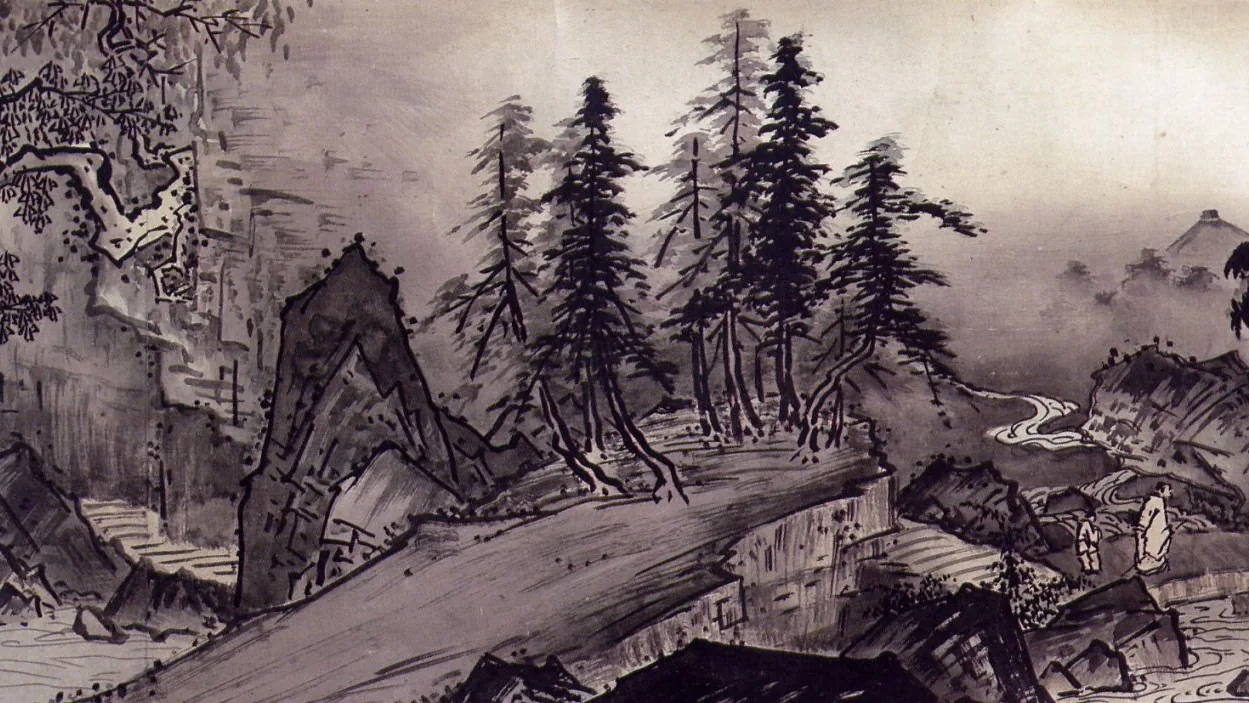
Part of the Long Landscape Scroll by the Zen monk-painter Sesshū Tōyō, 1486.
Sesshū Tōyō · Public domain
Philosophy
- Ancient Foundations, Kamakura and Dogen Explores Japan's earliest philosophical traditions from Shinto through Kamakura Buddhism to Dogen.
- Contemporary Japanese Philosophy Examines post-war reckoning, Maruyama's political philosophy, feminist thought, environmental ethics, and technology.
- Edo Period: Confucian, National Learning and Western Encounter Traces Tokugawa Japan's philosophical ferment: Neo-Confucianism, Ancient Learning, Kokugaku, and Dutch Learning.
- Meiji Modernity and the Kyoto School Follows the encounter between Japanese and Western philosophy from Meiji through Nishida, Tanabe, Watsuji, Nishitani, and Kuki.
- Zen Buddhism and Medieval Thought Explores Rinzai koan practice, Zeami's Noh philosophy, Zen aesthetics, warrior philosophy, and Muromachi culture.
Ready to start learning?
Start for free