AI Tutoring Platform

Your personal
tutor,
always on.

An AI tutor you actually talk to — free forever. Epivo asks the questions, challenges your thinking, and guides you to understanding — not answers.

511 courses across 42 curricula
9,398+ learning objectives

Hear how it teaches

45 seconds from a real session on Socrates. The tutor asks; the learner works it out; the tutor takes it further.

RachelAI tutor
The learnerAdult learner

0:00 / 0:45

One exchange from the middle of a longer session. The tutor's voice is the one learners hear; the learner's words are read by a stand-in voice.

Learning that actually works

Voice-first tutoring

Just talk. Epivo listens and responds in real time — hands-free, on your phone.

Teaches you to think

Epivo doesn't lecture — it asks questions, challenges assumptions, and helps you reason through ideas yourself.

Structured courses

Curated courses from philosophy and world history to national school curricula — each with clear progression, prerequisites, and mastery tracking.

Remembers where you left off

Epivo tracks your mastery across sessions — what you know, what needs work, and even your personal interests and learning style.

What makes Epivo different

A voice-first AI tutor that combines the engagement of a real conversation with the accountability of knowing what you've actually learned — across every subject, for every age, available anywhere.

Pick your tutor

Choose the voice you want to learn with. You can switch to another tutor in the app whenever you like.

Play
RachelAI tutor
Uncle DanAI tutor
LucyAI tutor
RichieAI tutor
JoshAI tutor
HopeAI tutor
OtisAI tutor
BobbyAI tutor
CodyAI storyteller

With a Premium voice, a storyteller may take over topics with a good story. These are our Premium voices. When your Premium voice minutes run out, lessons continue with a free voice on your device.

What you can learn

For curious minds

A hiker standing on a rock, looking out over mountains at sunset Hai Phung · Unsplash
All ages

Psychology of Well-Being

What actually makes people thrive? Dive into the science behind happiness, habits, and behaviour change — from positive psychology and cognitive science to relationships, meaning-making, and mind-body practices. Practical, evidence-based, and designed for anyone curious about living better.

Hands typing on a laptop, an AI chat open on the screen Matheus Bertelli · Pexels
All ages

Artificial Intelligence

From pattern recognition to deepfakes, five courses that give you conceptual fluency in artificial intelligence — what it is, how it learns, how to use it, and what it means for your career and society. Designed for professionals who want to understand AI without writing a line of code.

A man working on a laptop behind a glass wall covered in sticky notes Vitaly Gariev · Unsplash
All ages

Build with AI

Learn to build production software with AI — no coding required. Based on a proven methodology used to build SaaS platforms, corporate websites, and financial systems. Covers AI fundamentals, process architecture, deployment, and team-of-one workflows. Explores questions like: How do you ensure quality without reading code? How does one person do the work of fifty?

A hand moving a chess piece on a board Elias Derksen · Unsplash
All ages

Critical Thinking

From spotting logical fallacies to navigating misleading statistics and media manipulation, this curriculum builds the practical reasoning skills every adult needs. Explores questions like: Why do smart people fall for bad arguments? How can a graph tell the truth and lie at the same time? What makes you change your mind — and what should?

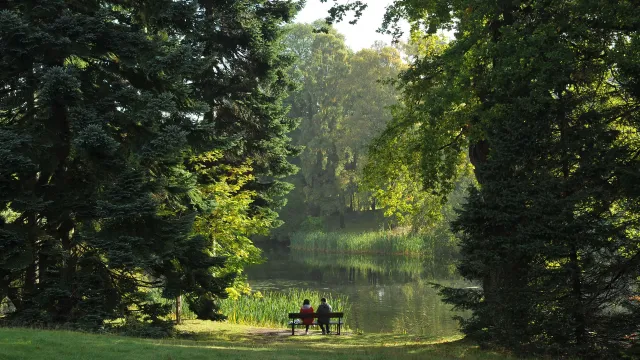
Two people sitting together on a bench by a lake, seen from behind Fredric Lee Phillips · Pexels
All ages

Practical Psychology

Applied psychological science for everyday life — from how you make decisions and navigate difficult conversations to why groups behave the way they do. Covers decision science, communication skills, social influence, human development across the lifespan, and workplace psychology. Grounded in peer-reviewed research from Kahneman, Cialdini, Piaget, Edmondson, and others.

Science

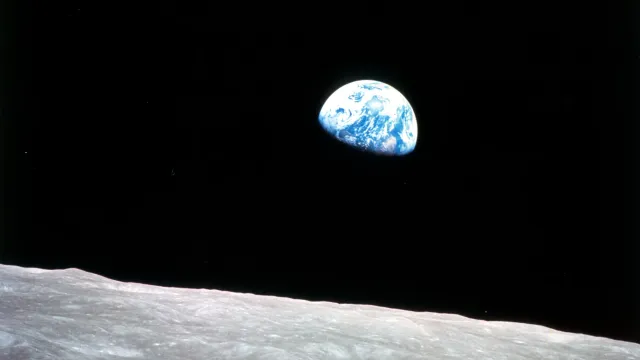
The Earth rising over the grey horizon of the Moon, half lit, against black space Bill Anders, NASA · Public domain
All ages

The Big Questions of Science

From the Big Bang to black holes, from DNA to dinosaurs — explore the biggest questions in science without needing a science degree. Covers cosmology, evolution, the human body, everyday physics, our planet, and the scientific frontiers reshaping our future. Like having a fascinating conversation with a scientist friend who makes everything click.

Towering clouds of gas and dust in the Carina Nebula, glittering with young stars NASA, ESA, CSA, STScI · Public domain
All ages

Astronomy

What is a black hole, and how did we photograph something that swallows light? What is the invisible matter holding galaxies together, and what came before the stars? Work it out with your tutor, one clue at a time, from black holes and exploding stars to the planets in tonight's sky and the first moments of the universe. Then go deeper: the arguments over how fast the universe is expanding, exploding and ringing stars, how planets are born, the map of our own galaxy, and what the space probes found. No maths or science background needed.

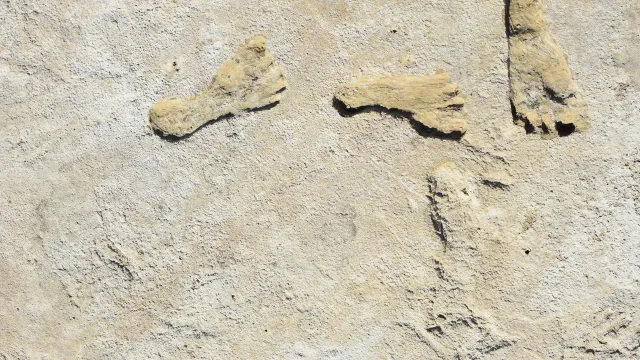
Three fossilised human footprints, raised in pale gypsum, crossing a dry lakebed surface National Park Service · Public domain
All ages

Human Origins

Fifty thousand years ago we were not alone. Who were the Neanderthals and Denisovans, why do most people alive today still carry their DNA, and why are we the only humans left? Work it out with your tutor, from the first upright walkers in Africa to footprints left by some of the first Americans — and go deeper into how our bodies and our cultures evolved, our primate roots, and who moved and mixed in the last 10,000 years. No science background needed.

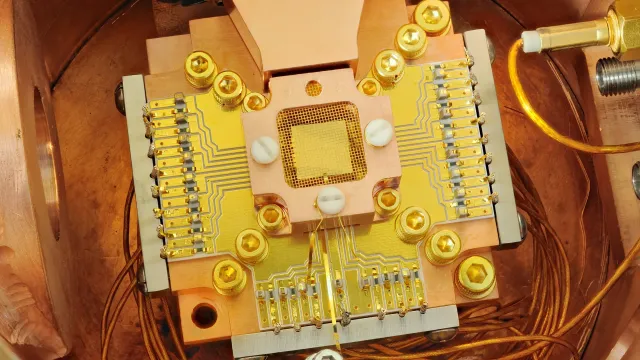
A gold-plated ion-trap chip with rows of electrodes, mounted in a copper vacuum housing and wired with fine copper leads National Institute of Standards and Technology (NIST) · Public domain
All ages

Quantum Physics

Quantum physics without the maths or the mysticism. Start with the experiments that broke common sense — one particle through two slits, entanglement, walking through walls — then see the machines being built on them and what they can really do, and finish with the question physicists still argue about: what is actually going on. Along the way you learn which ideas are settled, which are likely and which are still open. Then go deeper if you want more: the quantum physics of materials, how a quantum computer really works and how to judge the race, and the famous puzzle experiments re-examined.

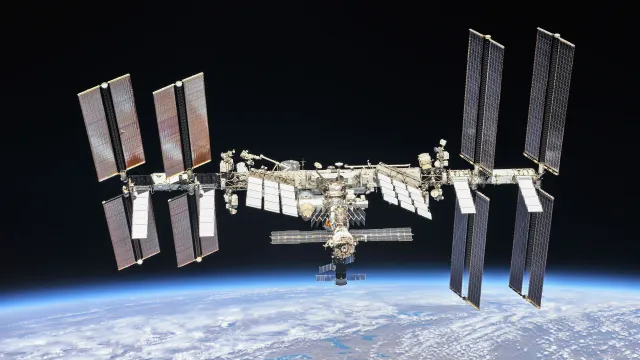
The whole International Space Station, with its long solar panels, above the blue edge of the Earth NASA/Roscosmos · Public domain
All ages

Space Exploration

How do we actually leave Earth, survive out there and get around the Solar System? Work it out with your tutor, from why a rocket is almost all fuel to what months without weight do to a body, how we are going back to the Moon, and why low orbit is filling up with junk. Then go deeper: inside the engines and the routes, and into what it would take to live out there for years. No maths or science background needed.

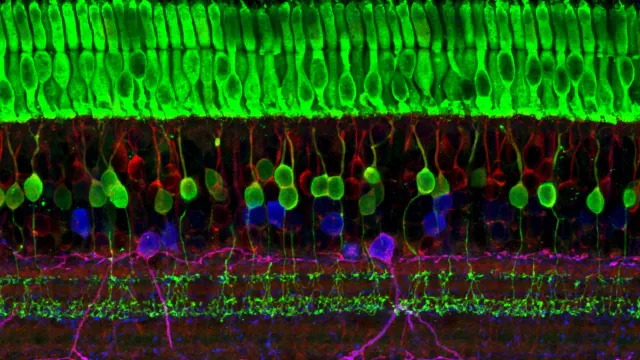
Rows of glowing green, red and blue nerve cells in the layers of the retina National Institutes of Health · Public domain
All ages

The Brain and the Mind

Your brain is guessing what the world looks like, able to rewrite a memory each time you recall it, and running a light show every night. Work out how, and how scientists caught it in the act: from optical illusions and planted memories to dreams, consciousness and brain implants. No science background needed.

Philosophy

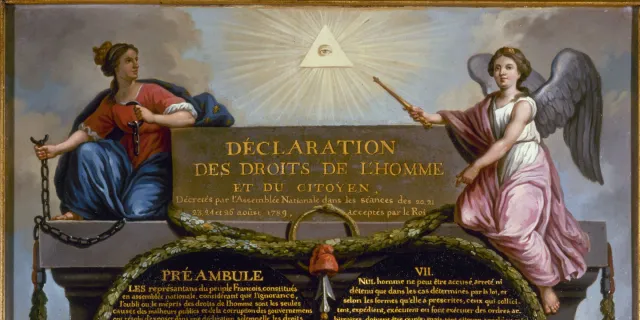
The Declaration of the Rights of Man and of the Citizen, 1789, painted by Le Barbier Le Barbier · Public domain
All ages

Western Philosophy

Explore the big questions that have shaped human thought — from Plato's cave and Aristotle's ethics to Descartes' radical doubt, Kant's moral law, and existentialism. Follow the ideas that challenged authority, redefined justice, and still influence how we think about knowledge, freedom, and the good life.

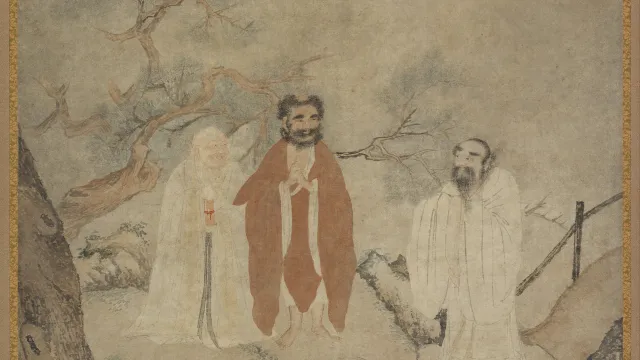
Ming painting of the Buddha, Laozi and Confucius standing together Freer Gallery of Art · Public domain
All ages

Chinese Philosophy

Three thousand years of philosophical thought — from Confucius and Laozi to Mao, Wang Yangming, and contemporary thinkers. Explores the questions Chinese philosophy asks that Western philosophy rarely does: Is human nature good? What is the Way? Can universal love be a political programme? Rigorous, critically grounded, and presented without ideological lens.

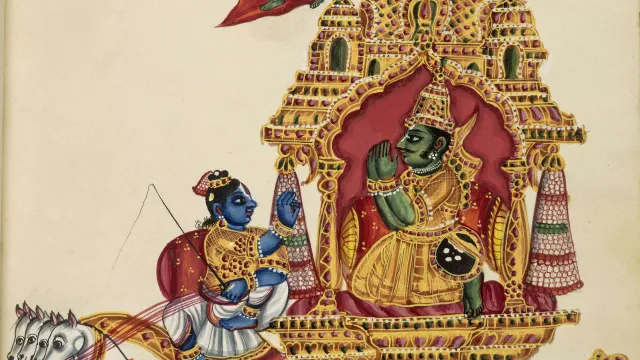
Krishna on a chariot instructing the warrior Arjuna British Museum · Public domain
All ages

Indian Philosophy

From the Vedic hymns to Ambedkar's critique of caste — three thousand years of Indian philosophical thought. Explores Brahman and Atman, the heterodox challengers (Buddhism, Jainism), the six orthodox schools, the Vedanta debates of Shankara, Ramanuja, and Madhva, the devotional poetry of Mirabai and Kabir, and the modern thinkers who brought Indian philosophy into dialogue with the world.

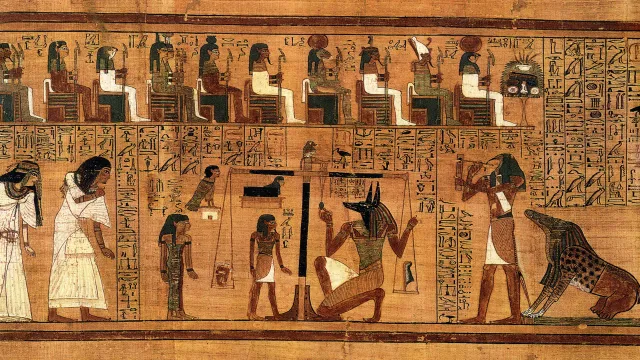
The weighing of the heart against Maat's feather, from the Papyrus of Ani British Museum · Public domain
All ages

African Philosophy

From Maat and Ifa divination to Fanon and Mbembe -- three thousand years of African philosophical thought. Explores Ubuntu ethics, Yoruba and Akan metaphysics, Pan-African political philosophy, and the decolonial critique that reshaped how the world thinks about knowledge and power. A continent's philosophy on its own terms.

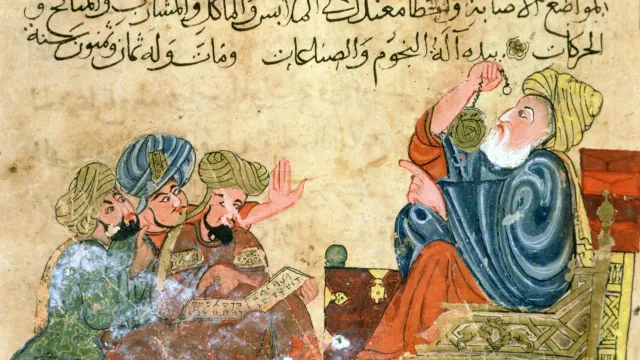
Aristotle teaching his students, from a 13th-century Arabic manuscript Topkapı Palace Library · Public domain
All ages

Islamic Philosophy

Fourteen centuries of Islamic philosophical inquiry — from the House of Wisdom's translation movement to contemporary feminist and decolonial thought. Explores the great debates: Can reason demonstrate God's existence? Does al-Ghazali's Tahafut refute Aristotelian science? What does Avicenna's Flying Man reveal about self-consciousness? Traces rationalist falsafa, Sufi mystical metaphysics, political philosophy, and global dialogue across Arabic, Persian, and Urdu intellectual traditions.

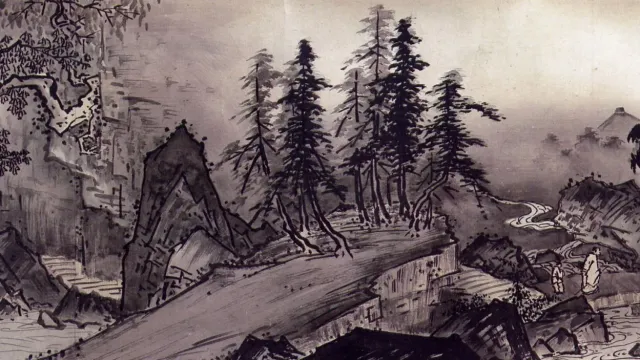
Ink landscape of pines and mountains by the Zen painter Sesshū Sesshū Tōyō · Public domain
All ages

Japanese Philosophy

From Shinto's sacred landscapes through samurai ethics and Zen aesthetics to the Kyoto School's radical encounter with Western thought. Traces how Japanese thinkers transformed Buddhist, Confucian, and indigenous ideas into a distinctive philosophical tradition — and asks what Nishida's pure experience and Dogen's being-time reveal about consciousness, nature, and what it means to be human.

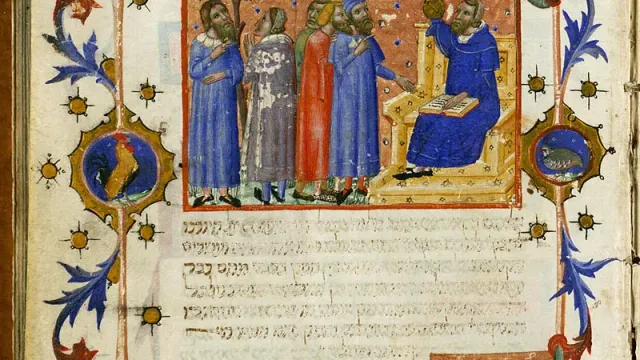
Maimonides teaching, from a 14th-century manuscript of the Guide for the Perplexed Royal Danish Library · Public domain
All ages

Jewish Philosophy

Three thousand years of Jewish philosophical reflection — from the wisdom of Job and Ecclesiastes, through medieval rationalists and kabbalists, to Spinoza, Rosenzweig, and Levinas. Asks: What can we know of God? How do we act in an unjust world? What does it mean to be a people scattered through history?

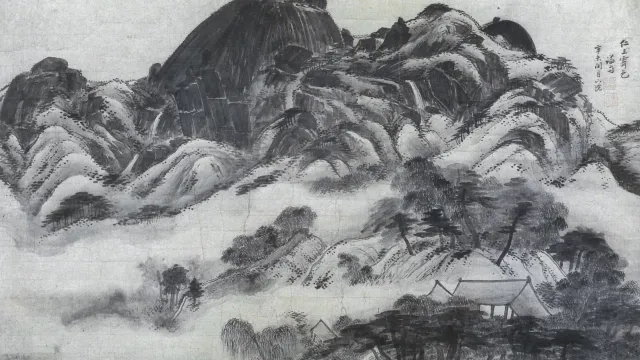
Ink painting of Mount Inwang with mist clearing after rain Jeong Seon · Public domain
All ages

Korean Philosophy

Three thousand years of Korean thought — from ancient shamanic roots through Buddhist scholasticism, Neo-Confucian debate, and Donghak revolution to contemporary feminist and minjung philosophy. Explores how Korea adapted, challenged, and transformed every major intellectual tradition it encountered. What does it mean when peasants arm themselves with a philosophical idea? When a dynasty collapses because it ran out of ideas? This curriculum answers those questions.

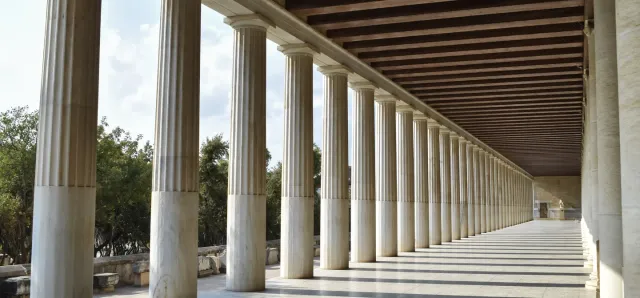
The long marble colonnade of the reconstructed Stoa of Attalos in Athens, its columns receding under a wooden roof Julian Lupyan · CC0
All ages

Practical Stoicism

From Epictetus' slave quarters to Marcus Aurelius' imperial tent, Stoic philosophy was forged in the gap between what happens to us and how we respond. This curriculum teaches you to use the Stoic toolkit — the dichotomy of control, negative visualization, the evening review, the four cardinal virtues — as daily practices for managing stress, making clearer decisions, and building genuine resilience. Explores questions like: What is actually within your control? How do your judgments create your emotional reality? What would a Stoic morning routine look like in your life?

History

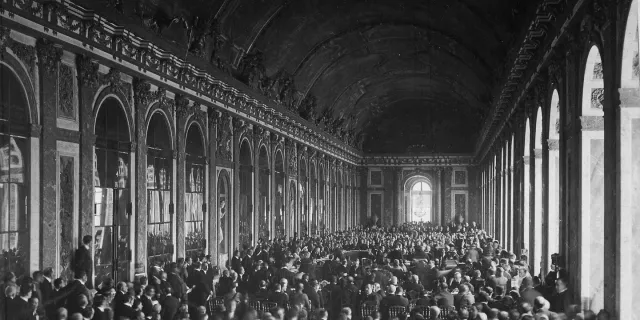
The signing of the Treaty of Versailles in the Hall of Mirrors, 1919 Kirtland · Public domain
All ages

World War I

Nineteen fourteen to nineteen nineteen: five years that shattered the old world and made the new one. Trace the arc from the alliance rivalries and nationalist crises that sparked the conflict to the trenches of Verdun, the Russian Revolution, America's entry, and the fateful peace at Versailles — and understand how this war planted the seeds of the next. Covers all fronts, the home front, and the cultural revolution that industrial killing forced on an entire civilization.

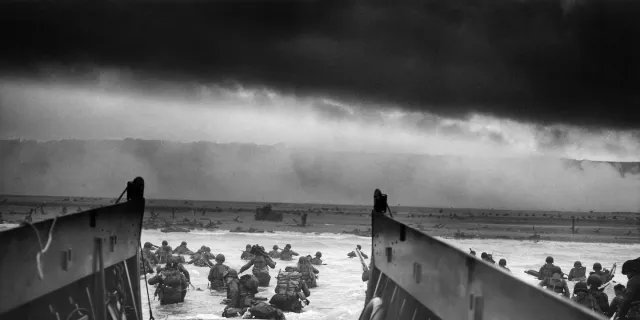
Allied troops wading ashore on the coast of Normandy on 6 June 1944 Robert F. Sargent · Public domain
All ages

World War II

How did the world descend into its deadliest conflict — and what changed because of it? Trace the path from the aftermath of World War I through the rise of totalitarianism, major battles on every front, the Holocaust, life on the home fronts, and the new world order that emerged from the ruins.

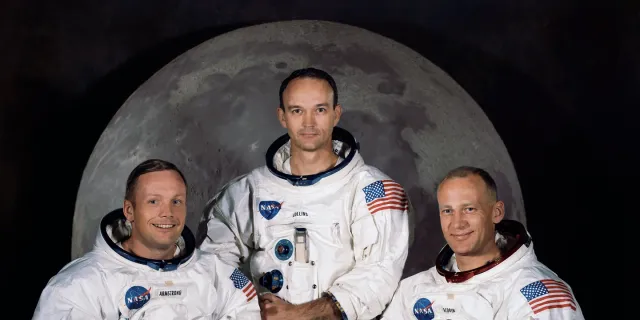
Astronaut Buzz Aldrin on the lunar surface during the Apollo 11 mission in 1969 NASA · Public domain
All ages

Cold War

The superpower rivalry that shaped the modern world — from the division of Europe and the nuclear arms race through proxy wars on three continents, life behind the Iron Curtain, and the revolutions that brought down communism. Explores questions like: Why did wartime allies become mortal enemies? How close did we come to nuclear war? What was daily life like in the Soviet bloc?

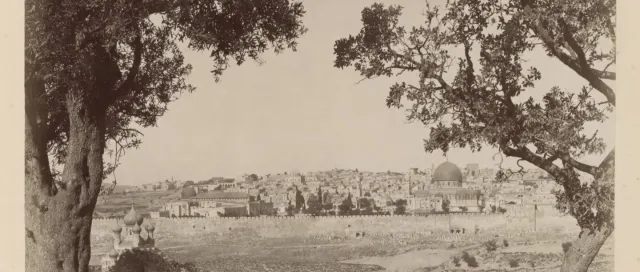
Jerusalem seen from the Mount of Olives in the late 19th century by Felix Bonfils Félix Bonfils · Public domain
All ages

History of Palestine

Three thousand years of Palestinian history — from the ancient Canaanite period through Ottoman rule to the present-day conflict. Explores identity, colonialism, displacement, and resistance through the scholarly frameworks of Edward Said, Avi Shlaim, Ilan Pappe, and Rashid Khalidi. A rigorous, source-driven curriculum that centers the Palestinian experience.

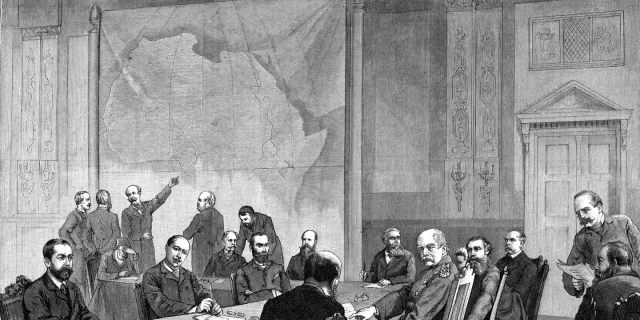
Illustration of the Berlin Conference of 1884, where European powers divided Africa Adalbert von Rößler · Public domain
All ages

Era of Imperialism

Five centuries of European empire examined from the perspective of colonized peoples. From Mansa Musa's Mali to the fall of apartheid, explore how imperialism reshaped Africa, Asia, the Americas, the Middle East, and the Pacific - and how the colonized resisted, survived, and rebuilt. Who really profited from the Atlantic slave trade? Why did Haiti pay reparations to slaveholders until 1947? How did a legal fiction called terra nullius erase 65,000 years of Aboriginal civilization?

School curriculums

Gouache painting of a sunlit desk by an open window with a brass telescope, books, a seashell, a paper boat and wooden shapes AI-generated
Grade 1–12

International

Independently authored curriculum. Covers 8 subjects across Grades 1–12. Explores questions like: Why do civilisations rise and fall? How does particle theory explain the states of matter? What is algebra really for?

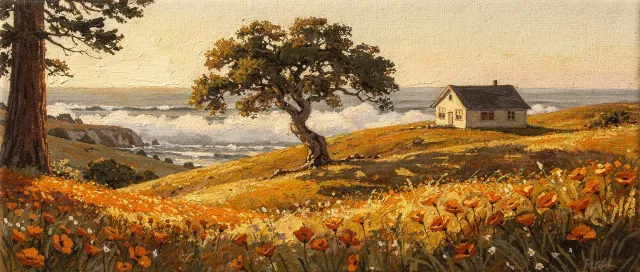
Gouache painting of a small schoolhouse on poppy-covered golden hills above the Pacific, with an oak and a redwood AI-generated
Grade 4–10

California Curriculum (CCSS/NGSS)

From place value and fractions to California's Gold Rush and the DNA molecule, this curriculum covers mathematics, English, science, and social studies for Grades 4-10. Aligned to California's Common Core and NGSS standards, it explores questions like: How do ratios and proportional reasoning connect arithmetic to financial literacy? What drove the Age of Revolution, and how do those forces still shape the modern world? How does natural selection work at the molecular level?

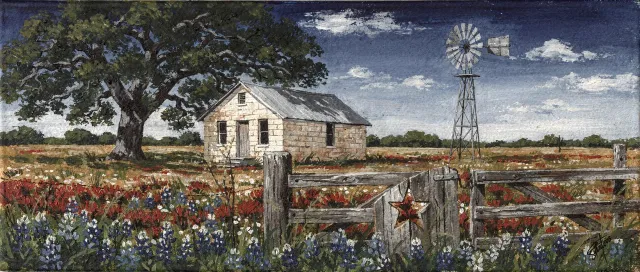
Gouache painting of a limestone Texas Hill Country schoolhouse among bluebonnets and red paintbrush, with a windmill, a live oak and a star on the gate AI-generated
Grade 4–10

Texas Curriculum (TEKS)

Grade-level subject mastery aligned to the Texas state standards (TEKS): math, English language arts, science and social studies for grades 4 to 8, plus Algebra I, Biology, Chemistry and World History for grades 9 and 10. Explores questions like: How do ratios describe the world around us? What makes a convincing argument in writing?

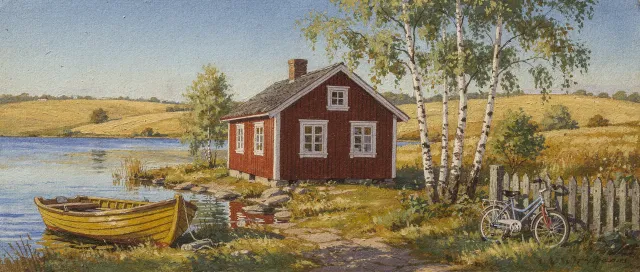
Gouache painting of a red wooden Swedish schoolhouse by a lake, with birch trees, a yellow rowing boat and a bicycle by the fence AI-generated
Grade 0–9

Swedish Curriculum (LGR 22)

The Swedish national school curriculum (LGR 22), covering all compulsory subjects from Grade 1 through Grade 9 — mathematics, languages, natural sciences, history, geography, religious studies, civics, arts, music, and physical education. From understanding how ecosystems balance and why the French Revolution changed the world, to comparing ethical frameworks across world religions and reasoning with statistics. Built around Skolverket's national learning goals, as taught in Swedish schools.

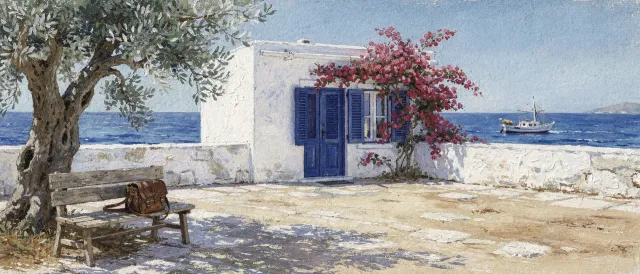
Gouache painting of a whitewashed Greek island schoolyard with blue shutters, an olive tree, bougainvillea and a satchel on a bench by the sea AI-generated
Grade 1–12

ΔΕΠΠΣ (Greek curriculum)

Independently authored curriculum aligned to the Greek national ΔΕΠΠΣ/ΑΠΣ framework. Covers 24 subjects across Grades 1–12, from mathematics and language arts to music, art, and physical education. Explores questions like: How did ancient Greek democracy shape the modern world? What makes a good algorithm? How does exercise affect your mental health?

How Epivo works

  1. 01

    Open the app

    Your AI tutor greets you and picks up right where you left off — on your phone.

  2. 02

    Talk through the topic

    The tutor asks questions, explains concepts, and adapts based on your answers — like a real conversation.

  3. 03

    Track your progress

    Every session updates your knowledge map. Gaps get addressed before they become blind spots.

For students

Curated courses from philosophy to school curricula — explore through real voice conversation, at your own pace.

Read more →

For parents

See real progress, not just grades. Know your child is actually learning.

Learn more →

Ready to start with Epivo?